Making the most of food and mealtimes
From the Peep Learning Together Programme – supporting parents and children to learn together through play and everyday life
Sharing a meal together is about so much more than just eating! It provides opportunities to chat about what everyone has been thinking and feeling, as well as things that have already happened or that are going to happen in the future.
Talking about feelings and about things that are beyond the here and now plays an important part in helping to support the development of children’s social, communication and language skills. Mealtimes are an ideal time for this kind of talk!
Sharing food and enjoying mealtimes
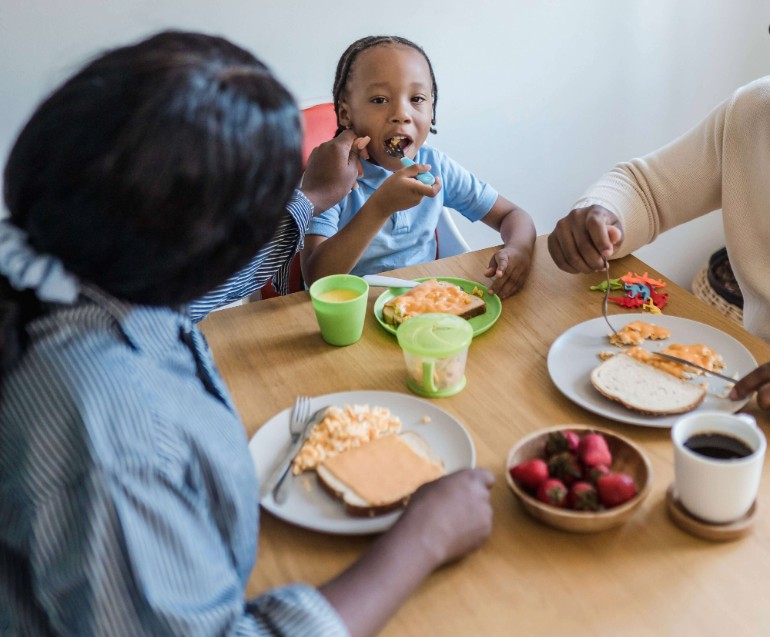
Sharing food can be a very sociable activity that strengthens relationships – bringing people together and chatting about everyday things. Mealtimes, or simply sharing a drink and a snack, provides a great opportunity for family members to talk about their day, share experiences and reconnect with each other. It can be nice to turn the TV off and forget about our phones during a meal so that we can give more attention to each other.
Young children are most likely to take their eating habits from those around them. By watching others and through practising themselves, they will learn how to use cutlery and begin to understand appropriate behaviours and manners.
They will also pick up how others feel about food by listening to their comments and watching their responses – if you say “Yuck!” about a particular food they are unlikely to want to try it for themselves! Seeing others eating healthily and enjoying their food will encourage them to do the same.
Enjoying mealtimes together is about much more than just food
Finding out about food
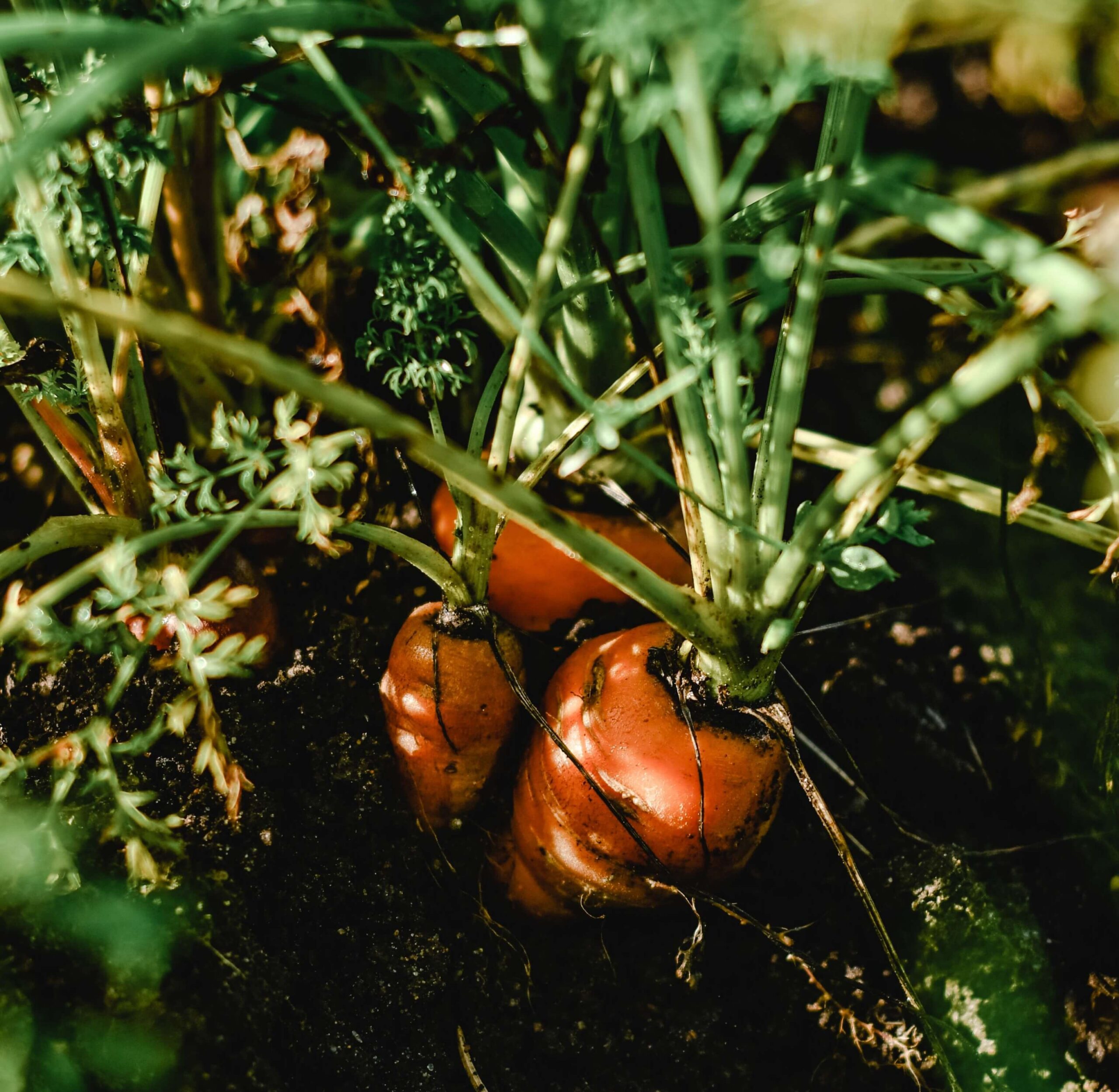
As adults, we take a lot of our knowledge about food for granted. Young children have some amazing things to discover about where their food comes from, such as:
- milk from a cow
- coconuts from palm trees
- carrots from the ground
- honey from bees in a honeycomb
Chatting with your child about these things, perhaps when you are out shopping or preparing a meal, will increase their understanding.
It is also helpful to talk with them about which foods are good for you and why – this will encourage them to make healthy choices about food as they get older.
Buying, preparing, cooking and sharing food
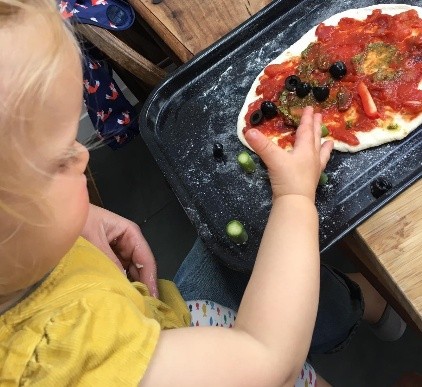
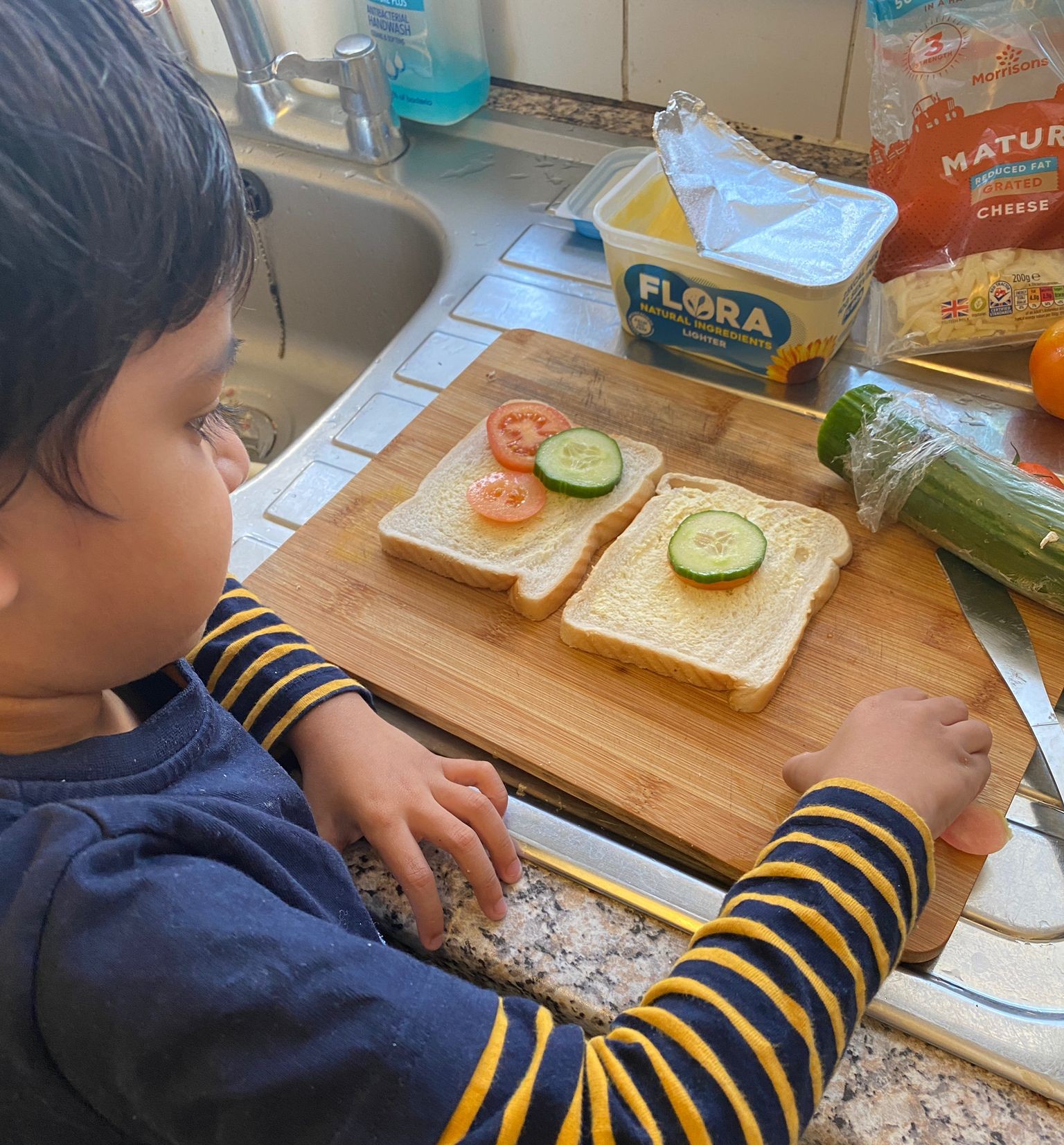
Children often enjoy joining in with the everyday things that are going on around them, including going shopping and making meals. It can be easy to forget that things which feel like chores for adults can be great fun and wonderful learning opportunities for children. Children who have played a part in creating their own food are more likely to eat it – or at least give it a try!
Involving your child in buying, preparing, cooking and sharing food will help to support their early learning and development by:
- understanding where food comes from
- increasing their awareness of healthy food choices
- developing social and communication skills
- increasing vocabulary
- encouraging their independence
- developing physical skills through handling food, cutlery and other utensils
- developing food preferences
- learning about maths ideas such as numbers, counting, weight, size, shapes etc.
Children learn a lot when they help to buy and prepare food – and then share it with others
Supporting your child’s early learning
ORIM is a useful reminder of all the wonderful ways we help our children every day. It can also be helpful for thinking about some new ways to help children learn and feel good about themselves.
Here are some ideas for making most of buying, preparing, cooking and sharing food with your child:
Opportunities:
- providing age-appropriate cutlery for self-feeding
- offering simple food choices
- learning about where food has come from
Recognition:
- of their food preferences, likes and dislikes
- of their efforts to feed themselves
- of how your responses to foods can influence your child’s attitudes toward food
Interaction:
- sharing meals together
- discussing healthy food choices
- cooking together
Modelling:
- using appropriate social and cultural approaches and attitudes toward food – including manners
- demonstrating the appropriate use of cutlery
- showing a willingness to try new foods
Involving your child in buying, preparing, cooking and sharing food will help them to make the most of food and mealtimes
Peep programmes and resources
The information on this page is from our Peep Learning Together Programme. In Peep sessions, families share song and storytime, play activities and conversations focusing on supporting babies’ and children’s development through play and everyday life.
Peep builds on the things you’re already doing with your child, making the most of everyday moments to learn together, have fun and strengthen relationships.
If you’re a parent or carer:
If you work with families:
This resource is one of a selection from the Peep Learning Together Programme shared in support of the Learners from Birth initiative.
Ages and stages: We recognise that children are all different, and developmental needs and interests don’t always align with a child’s age. Any ages mentioned are a general guide – the resources are for using flexibly to meet individual children’s needs and interests.