
Families Learning Together Project
Supporting early intervention, partnership and family learning across Scotland
The Families Learning Together (FLT) project explored how evidence-based family learning can help families earlier, while strengthening the local services and partnerships that support them.
Funded through the Scottish Government’s Whole Family Wellbeing Fund, the project ran from 2023 to 2026, building on the previous ‘Family Learning Scotland’. It aimed to contribute to Scotland’s shift towards prevention and early intervention – helping to strengthen parent networks and understanding of how to support their babies’ and young children’s development. It also focused on supporting families before any difficulties escalate and reducing reliance on crisis support.
Initially planned for ten local authority areas, funding was ultimately shared across 11 areas, including smaller and rural authorities. These were Edinburgh, East Ayrshire, Highland, Falkirk, Dumfries and Galloway, Perth and Kinross, South Ayrshire, Moray, Aberdeen, Shetland and East Lothian. The project brought Peep programmes into a wide range of existing services and community settings, rather than creating a separate service for families.
Peep helps me to understand things and how I can support my child with learning at home, as well as in school.”
Families Learning Together Parent
Building support around families
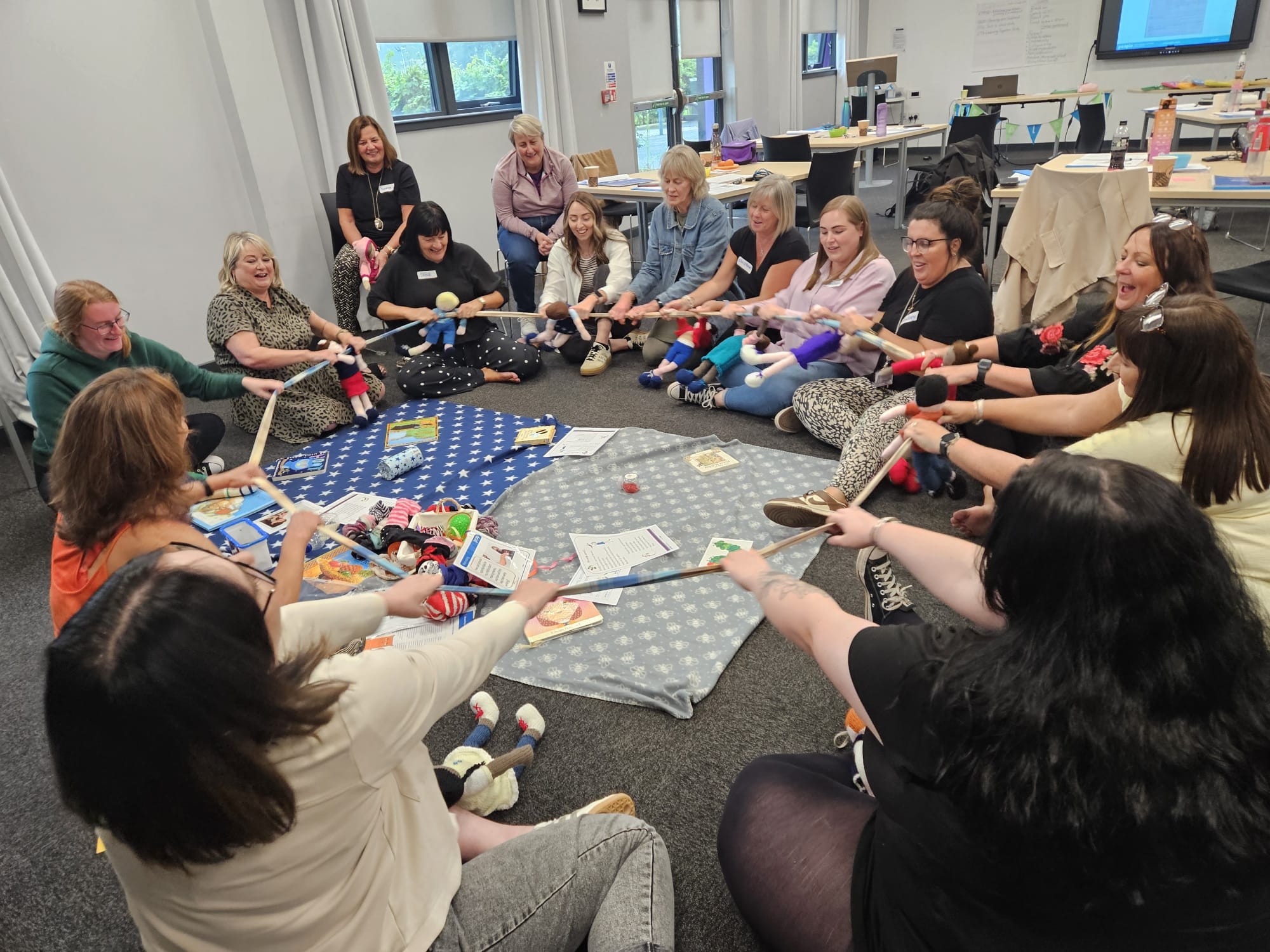
Families Learning Together included the Peep Learning Together Programme, Peep Antenatal Programme and Peep Progression Pathway, alongside practitioner accreditation. Practitioners across different services were trained to use these approaches with families, helping to build shared knowledge and stronger connections between services.
972 practitioners received funded training, including:
- 530 in the Peep Learning Together Programme
- 295 in the Peep Antenatal Programme
- 147 in the Peep Progression Pathway.
They came from a wide range of sectors, including health visiting, midwifery, speech and language therapy, education, community learning and development, libraries, childcare, prisons and third-sector services.
This cross-sector approach was an important part of the project. Practitioners reported stronger referral pathways, more consistent messages for parents, greater awareness of other support and stronger relationships across agencies.
Supporting children and parents
At the heart of FLT was supporting the everyday interactions between parents and children that make a difference to early development.
Through antenatal and early years delivery, families explored attachment, communication, responsive parenting, play and language development, and understanding children’s cues and behaviour. Parents reported a stronger understanding of the learning that happens through everyday activities and increased confidence in supporting their children’s learning at home.
The project also helped families to build connections with other parents. Peer networks provided welcoming spaces where families could share experiences and feel supported, helping to reduce isolation.
The Peep Progression Pathway added another dimension, enabling parents to work towards recognised qualifications and potentially progress into volunteering, further learning or employment. All 11 areas took up training to become delivery centres for the Pathway, with further support continuing as their provision develops.
My relationship with N feels stronger and I have a better understanding on how to help her develop.”
Families Learning Together Parent
Family learning in different settings
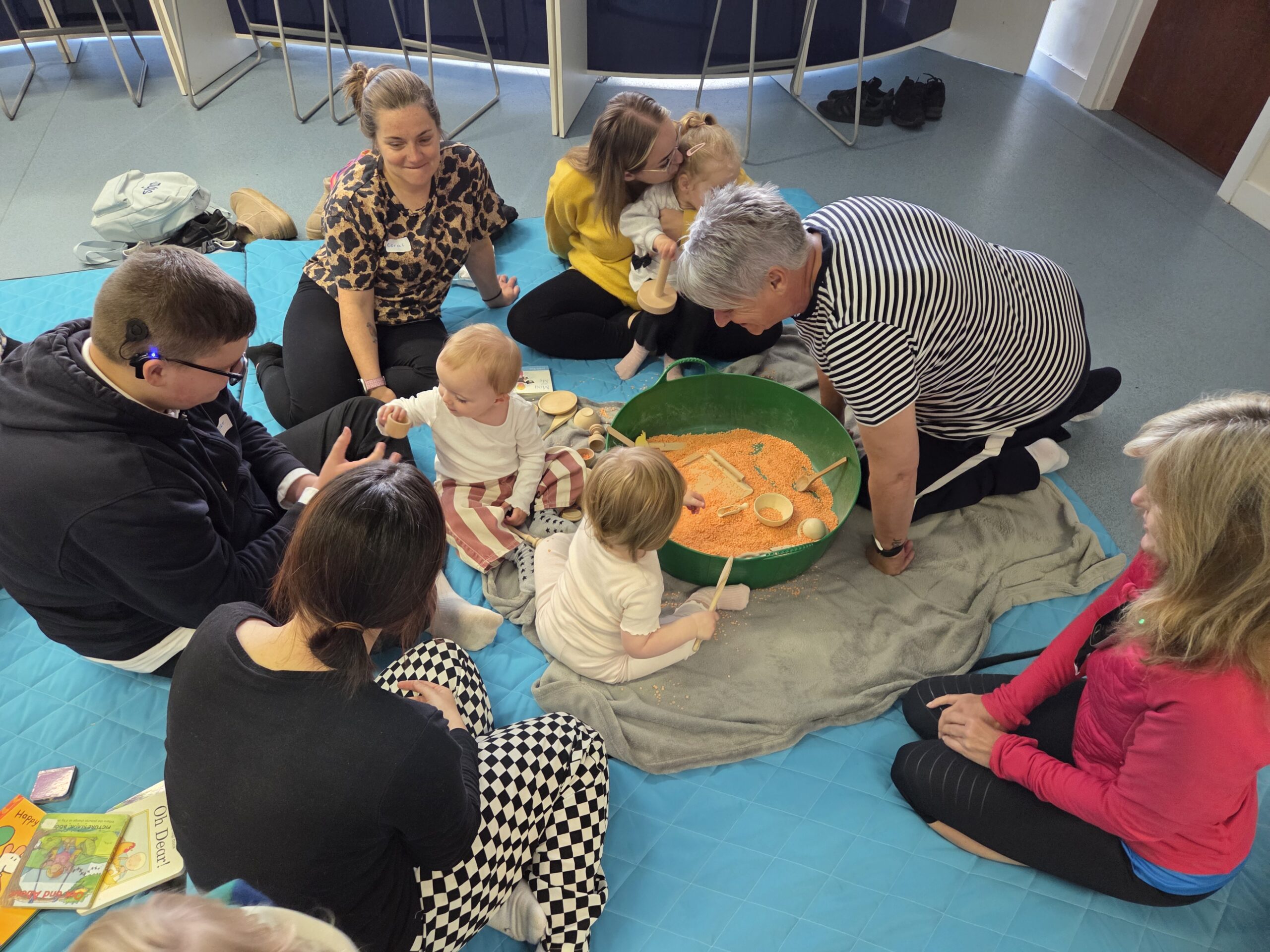
One of the strengths of Families Learning Together was its flexibility. Peep approaches were used through health, education, community and other services, adapting to local priorities and the families they worked with.
Examples highlighted in the evaluation include a partnership between Peep, early years services and NHS dietetic services in Ayrshire; an intergenerational Peep project bringing secondary school pupils together with young children and their parents at Sanquhar Academy; and work with Ayrshire College to embed family learning within students’ practical early years experience.
FLT also reached into Scotland’s prison system: staff in 12 of Scotland’s 14 prisons received training in Peep programmes during the project.
What did we learn?
The evaluation identified four important lessons for preventative family support:
- Trusted relationships matter. Families engaged most effectively when support was offered in familiar, accessible community settings.
- Workforce development can help change systems. Training people from different sectors together supported collaboration and more joined-up pathways for families.
- Local flexibility is important. The strongest approaches reflected local communities, services and priorities rather than following one rigid model.
- Training needs ongoing support. Mentoring, co-delivery, observation and peer learning helped practitioners develop confidence and embed their learning in practice.
The project also highlighted challenges, including differences in local partnership structures and data systems. Sustainability was strongest where multidisciplinary working and preventative family learning became embedded in existing services rather than remaining dependent on a stand-alone project.
We have observed that families have created a safe space to be open and honest with each other and offer guidance when needed. Our families have the freedom to shape their PEEP group through a variety of experiences that we provide.
We use the approach that we are on hand to offer support to families however we advocate that they know their children best and our guidance can enhance the skills that they already have in supporting their children’s development. Through building positive relationships with families, communicating with them regularly and creating exciting experiences.”
Peep FLT Practitioner
Looking ahead
The evaluation concludes that relatively modest investment in preventative family learning can contribute to wider system change – strengthening support for families by building the skills, relationships and connections that already exist within local communities and services.
The next step is to embed and sustain these ways of working, retaining the cross-service relationships, shared approaches and preventative focus developed through FLT. The report also identifies opportunities for wider learning across Scotland, particularly around antenatal and early years support, whole-family pathways and multidisciplinary workforce development.
I like PEEP because it gives my child a chance to interact with other children. Singing the songs together is our favourite! I like having a support network, it’s fantastic to have the reassurance that you’re in the same boat as other families. It’s not a typical group, it’s like a wee community.”
Families Learning Together Parent