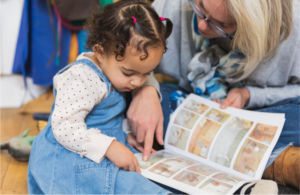
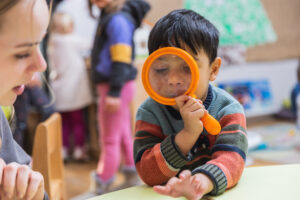
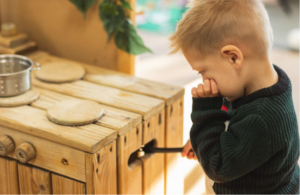
 Have you ever found that your child is more interested in the box that a toy came in, than the toy itself? It’s a common theme! When we think of toys for children to play with, we often think of shop-bought toys that ‘do’ something, but young children have an inborn curiosity which means that exploring everyday objects is just as exciting to them.
Play develops important life skills like talking and listening, and social skills including learning to share and take turns, as well as confidence. Playing with our children is a fantastic investment of our time as parents, as it also helps deepen bonds and feelings of security.
Children love exploratory play, experimenting with physical objects from the world around them, and when we harness this curiosity together, it might surprise you what fun you can have. Below is a list of some everyday objects and ideas for how they can be used in play – all these things are free or can often be found around the home. If you don’t have the suggested item just swap it for something you do have. The most important thing is having fun!
Play ideas for everyday objects:
Towel: den, trampoline for bouncing soft toys up and down, picnic blanket for a teddy bears picnic, duvet for sleepy dolly, cape for a superhero, peekaboo, tug of war.
Plastic milk carton: watering can (make holes in the lid), shaker, measuring jug for water play/ bath time, plant pot (cut the top half off), house for small world play (cut a door in the side)
Colander: drum, water play, story prop (makes a great space helmet!), post box for dry spaghetti developing small finger movements (fine motor skills).
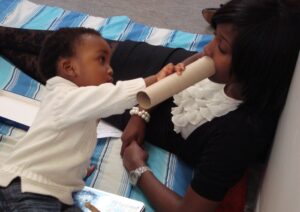 Kitchen rolls or toilet rolls: telescope or binoculars (stick two together), car park for miniature cars, megaphone (sorry parents!), tunnel, bandage for teddy’s sore arm.
Egg carton: treasure chest, seedling planter, colour sorter, paint tray, building blocks.
Leaves: leaf rubbings, sensory play (crunching), colour sorting, small world hide and seek, paint stencil, outdoor pictures and nature art.
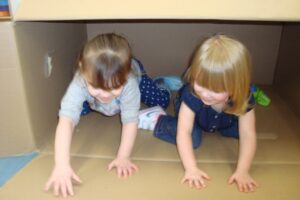
Laundry basket or big box: goal for paired up socks, vehicle (racing car, speed boat, carriage), ball pit, reading nook (add favourite books and blankets for extra cosiness).
Nursery rhyme props:
Grand Old Duke of York: bang on a pan or empty box with a spoon (or hands) for the marching beat
Row, Row, Row Your Boat: sit opposite your child and use a scarf or a towel to pull each other back and forth
Zoom, Zoom Zoom, We’re Going to the Moon: a colander on the head makes for a great intergalactic helmet!
London Bridge is Falling Down: build with cushions, egg boxes or empty margarine tubs…and enjoy knocking them down!
Whilst exploring these objects, your child will also be developing their early science and maths thinking and skills, even before they have the words to describe what they’re doing. It’s fascinating! It’s always worth keeping in mind, this year more than ever, that children don’t care how much toys cost, it’s your love and attention that mean the most to them.