
The Peep into School: Transition into Reception Programme was designed to support children and families as they prepared for entry into Reception. The initiative was developed through collaboration between Wonder Hub (Home Learning Environment strand of the Liverpool Best Start Family Hubs), Granby Family Hub and Alison Edwards, Headteacher at Kingsley Primary School -connected to Granby Family Hub. Our thanks to them for this case sudy.
Wonder Hub approached Kingsley Primary school with the proposal to deliver a four‑week Transition into School programme. The school agreed that a structured series of sessions would provide an effective foundation for children and parents, equipping them with key skills needed for a confident and successful start to school. The programme focused on strengthening self‑regulation, attention, communication and independence, while also supporting parents to understand how best to nurture these skills at home.
Recruitment and Engagement
Recruitment was led by Sarah Yasif, School Readiness Officer, who played a central role in identifying families who would benefit most from additional transition support. This included:
- children who may be less familiar with the routines and expectations of school
- families whose children were joining from PVI day nurseries and therefore did not yet have an established relationship with Kingsley Primary School
Sarah facilitated a school readiness meeting and distributed the programme flyer to families. As a result of this targeted outreach, thirteen parents registered, representing a cohort of children who were likely to benefit from enhanced transition support.
Programme Design and Delivery
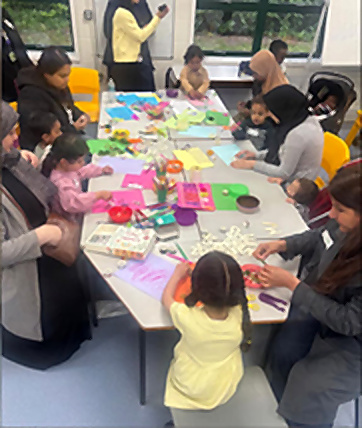
The four‑week transition programme was designed using core Peep principles, with each session structured around Peep Learning Together Programme topics known to support children’s early learning and adjustment to school routines. The programme incorporated a blend of practical creative activities, modelling, outdoor exploration, songs, stories and guided parent–child interaction.

Key elements included:
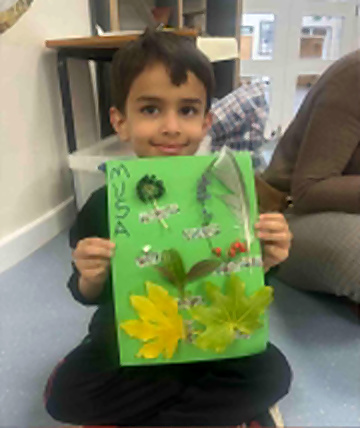
- Importance of Names: Activities emphasising name recognition, interests and identity, supporting children’s sense of belonging and confidence as they prepared to enter Reception. Parents made an All About Me book with their child, with opportunities for children to recognise, write their names and make marks in many ways.
- Talking and Listening Boxes: Designed to promote early communication skills, these boxes encouraged turn‑taking, sustained shared thinking, attention and vocabulary building development through playful interaction.
- Wooden Spoon Puppets: Used as a creative tool to explore emotions, routines, and self‑regulation strategies. Puppets supported children in expressing feelings and understanding the expectations of the school day.
- The importance of routines: Tiger who came to tea story, face painting and creating musical shakers.
To enhance the programme’s impact, specialist partners were invited to contribute:
- A Speech and Language Therapist offering individualised advice where needed.
- Koala, the North West Oral Health Promotion Team, delivered input on oral health routines, reinforcing messages around independence and self‑care.
- A member of Granby Family Hub attended sessions to support family engagement and ensure continuity between family services and the school community.
Together, these components created a holistic transition offer that addressed children’s social, emotional, communicative and practical readiness for starting reception.
Alignment with National Guidance and Evidence Base
The programme was explicitly aligned with national guidance on effective Reception transition. The team drew on:
- Supporting a Smooth Transition into Reception (Department for Education): Emphasising relationships, communication, and emotional readiness. See here for DfE guidance
- Starting Reception: A national resource offering practical strategies for preparing children for school routines. Read the guidance here
- Peeple guidance on Peep Transition Topics Providing an evidence‑based framework for selecting activities that promote communication, identity, independence, and self‑regulation. Read more about the Peep partnership approach to starting school here
Evaluation Summary
Evaluation was conducted using the Peep Learning Together evaluation framework, capturing parent feedback after the four‑week transition programme. Responses demonstrated strong engagement and highlighted a range of positive outcomes for both children and families.
Parents reported that the programme:
- Increased children’s confidence. Children became more assured in new environments and more willing to participate in group activities.
- Supported group participation. Families noted improvements in their child’s ability to follow routines, take turns, and understand how to engage within a group setting.
- Enhanced understanding of children’s interests. The activities enabled parents to observe emerging interests and strengths, helping them feel more attuned to their child’s learning behaviours.
- Inspired more arts and crafts at home. Creative elements such as puppets and personalised books encouraged families to extend expressive arts activities beyond the sessions.
- Provided practical parenting tips. Parents valued small but impactful reminders about sleep routines, bedtime reading, and supporting independence.
- Strengthened social connections. Meeting other parents and children helped families feel more connected to the school community and reduced anxieties about starting Reception.
- Improved communication skills. Parents observed increased confidence in talking with other children and felt better equipped to support communication at home.
Overall, the evaluation indicated that the programme successfully supported children’semotional readiness, communication development, and familiarity with school routines, while also empowering parents to take an active role in home learning.