Babies on the move
From the Peep Learning Together Programme – supporting parents and children to learn together through play and everyday life
Babies grow and develop really fast during their first 18 months of life. You can help by giving them lots of opportunities to be active by moving, stretching out and exploring their world.
Encouraging babies to wriggle, kick their legs and wave their arms will help them to discover what their bodies can do – and how to control them! This will support the development of their coordination and movement skills.
How does your baby grow?
Babies have a general pattern to their development – although they may reach different stages at different ages.
They need opportunities to develop the strength in their bodies so that they are able to hold their head up, then sit up securely and begin to get control of the larger movements they make with their arms and legs – these are called gross motor movements.
Generally once they have mastered those, they start to work on the smaller movements with their hands and fingers – these are called fine motor movements.
Eventually, as they grow and develop, young children will learn how to coordinate their movements so they can walk, run, jump, hop and skip – as well as being able to write, turn the pages of a book, get dressed, use a keypad etc.
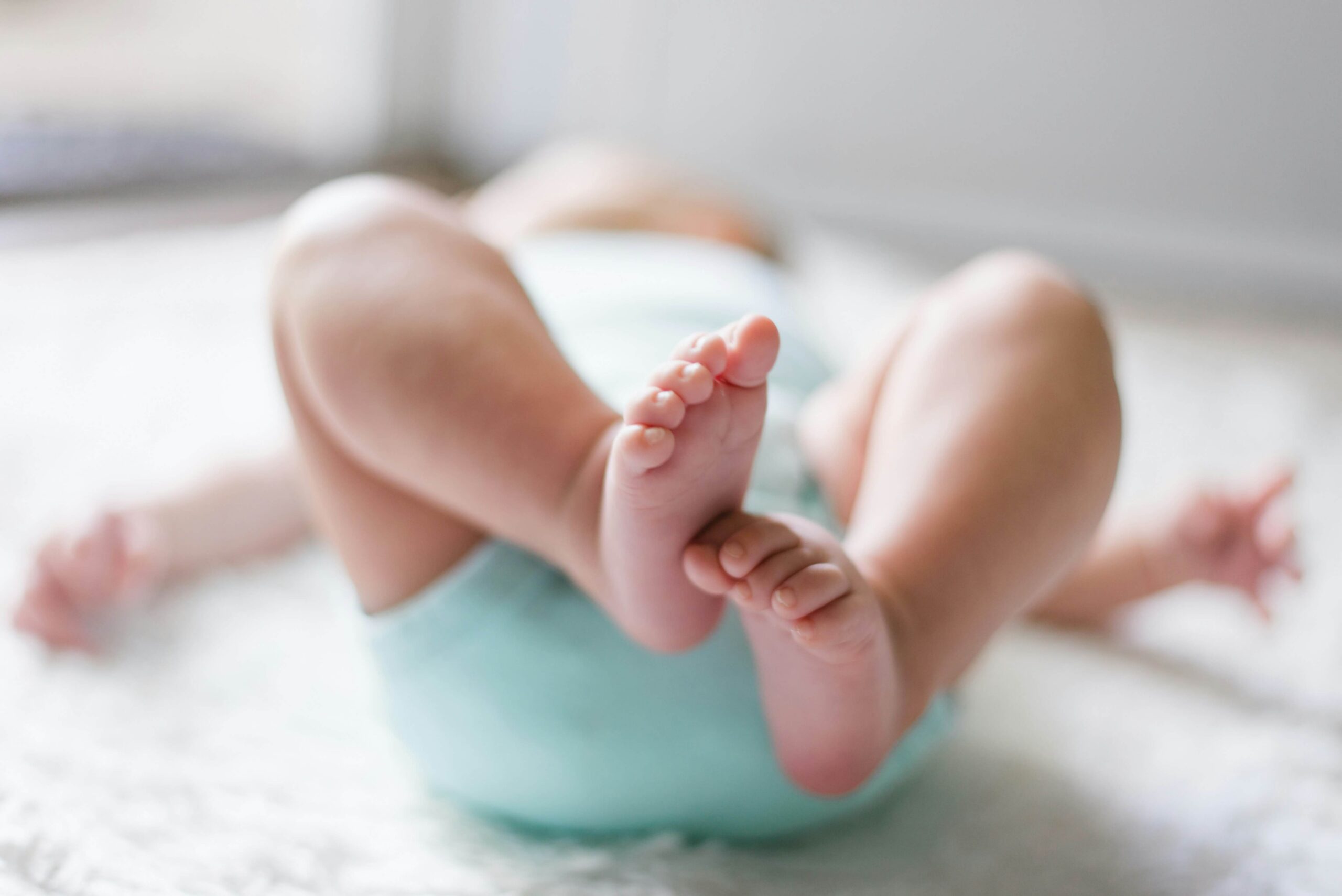
Babies need opportunities to move, stretch out and discover their world!
Body building for babies
To begin with, your baby won’t have much control over their movements, as they randomly wriggle, squirm, wave their arms and kick their legs.
They’ll enjoy having the freedom to practise these movements – perhaps in a safe and comfortable place on the floor, with you nearby to offer support and encouragement. Leaving their hands and feet bare will let them feel things around them and get a better grip with their fingers and toes.
Having opportunities to move in these ways will help your baby to build and strengthen their muscles. Over time and with lots of practice, they will be able to:
- hold their heads up
- control their arms and legs
- lift themselves up when on their tummies
- reach out and grasp things
- roll over, sit up and crawl.
Babies enjoy finding lots of different way of moving to explore their world
Tummy time
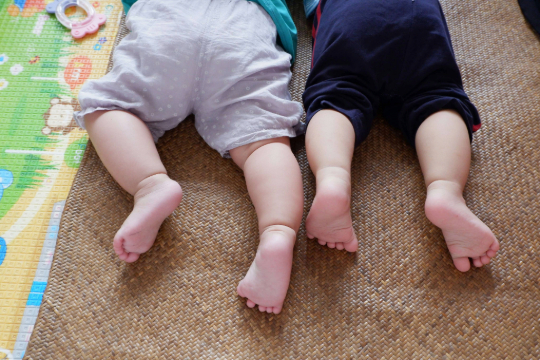
Spending time on their tummies doesn’t just mean lying flat on the floor…
Spending time being comfortable on their tummy when they are awake will help your baby develop the muscle strength and skills they will need to roll, crawl and pull themselves up on furniture.
To begin with, some babies may not be too keen being on their tummies – but there are lots of different ways for your baby to enjoy leaning forwards and taking the weight on their chest rather than their back.
Here are a few ideas to try:
- start with lying on one side, then the other side
- carry your baby tummy down – hold them securely with your arms underneath their chest and support their head in the crook of your arm.
- when sitting, have your baby facing away from you, leaning on your arm
- lie your baby on your lap – or your chest when you are sitting up in bed or on a comfy chair
Little and often is best – a minute or two at nappy changing time can quickly extend to a longer playtime. Your encouragement with smiles, silly faces, chatting or singing etc., will inspire them to continue their efforts!
On the move
Over time, babies will learn how to use their bodies to become mobile. You might have noticed your baby rolling, shuffling on their bottoms or transferring their weight from one shoulder to another and wriggling forward – usually it’s to get to something they are desperately trying to reach!
This is the start of a new phase where your baby will be keen to discover as much of their world as they can. It’s a good idea to check how ‘baby friendly’ your home is – getting down on your hands and knees to see the world from your baby’s point of view can help you to recognise and deal with any potential hazards!
When babies crawl, they use opposite sides of the body at the same time – the right arm goes forward at the same time as the left leg (try giving it a go!).
Learning to use the left side and right side of their bodies like this will help to build your baby’s brain in a way that will enable them to coordinate their movements. This will help them with reading and writing later in life.
Being on the move helps babies to:
- strengthen their muscles
- develop their balance and coordination
- improve their eyesight by encouraging them to look around them and into the distance.
Crawling supports babies’ early development and learning in lots of different ways
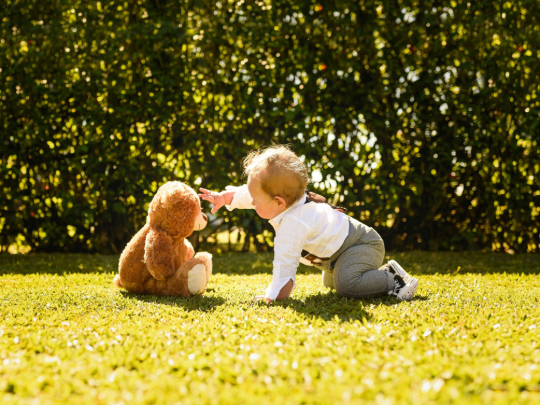
Babies feel good about themselves as they explore and discover their world
Peep programmes and resources
The information on this page is from our Peep Learning Together Programme. In Peep sessions, families share song and storytime, play activities and conversations focusing on supporting babies’ and children’s development through play and everyday life.
Peep builds on the things you’re already doing with your child, making the most of everyday moments to learn together, have fun and strengthen relationships.
If you’re a parent or carer:
If you work with families:
This resource is one of a selection from the Peep Learning Together Programme shared in support of the Learners from Birth initiative.
Ages and stages: We recognise that children are all different, and developmental needs and interests don’t always align with a child’s age. Any ages mentioned are a general guide – the resources are for using flexibly to meet individual children’s needs and interests.