Making the most of favourite books and stories
From the Peep Learning Together Programme – supporting parents and children to learn together through play and everyday life
Many young children have favourite books and stories which they ask for again and again.
They enjoy hearing the familiar language, talking about familiar characters and finding things they recognise in the pictures. Once they know a story really well they might enjoy the opportunity to help tell it themselves.
Why read stories again and again?
Becoming familiar with the words and pictures in favourite books helps children feel confident about using books and encourages them to begin to ‘read’ stories for themselves.
Children often remember the details of favourite books and may even ‘read’ whole pages from memory or tell you what is going to happen next.
Getting to know a book really well helps children understand the characters and what happens in the story. It will also help them to understand that the pictures and the words on the page are linked with each other.
These things are all part of learning to read and write, and they help young children begin to see themselves as readers.
Children often remember the details of favourite books and may even ‘read’ whole pages from memory
Being reassured by knowing what going to happen next
Favourite books and stories can help children through difficult times in their lives – perhaps when they feel sad, frightened or confused. They can be reassured by familiar characters, pictures and sequences of events where they know what will happen next.
In a real world that can sometimes be full of unfamiliar and new experiences, the familiarity of a favourite book or story can help to give children the comfort and security they need.
Favourite books and stories

Just as different books appeal to different adults – different books appeal to different children:
- some are fascinated by vehicles and will love books about diggers, trucks, trains and cars
- others love the sound of rhyming books or books with lots of repetition
- some may choose books where the main character is like them (e.g. has blonde hair), or where the story is something that is familiar to them (e.g. is about a trip to the zoo)
- others may love books that have flaps to lift and peek under
Joining in
As children’s language develops, there will be lots to talk about in favourite books and stories
When children share the same book again and again they become familiar with the pictures, words and order of events. Gradually, as their language develops, they might enjoy joining in too – try stopping before the end of a line – your child might fill in the gap!
I see a brown bear looking at….. “me!”
When your child knows the book really well, they’ll start to take the lead and may ‘read’ it to you in their own way, perhaps using a mixture of made-up words and a few words from the story. Believing that they themselves can read, and behaving like a reader (e.g. telling a story from a book), is an important part of becoming a reader.
You can encourage your child to join in by:
- asking them simple questions about the story
- suggesting words they can use to tell the story
- repeating words and joining in with sound effects such as animals noises and different voices
- watching, listening and responding when they are looking at a book – you’ll get to find out what they think makes the book interesting!
Talking to your child about their favourite books and stories will help them to explore and explain their world. It will also build their confidence and self‑esteem. And it can make it more interesting for you when it seems like the hundredth time you’ve read the same book!
Feeling confident about using books
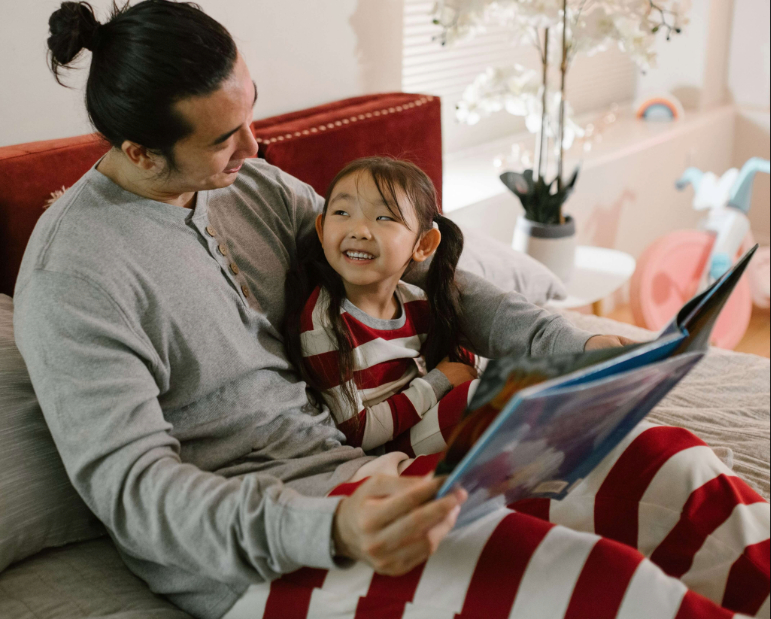
Children get a great sense of satisfaction and achievement from:
- finding the same things in pictures again and again
- knowing what will happen next
- knowing what will be under a flap when they lift it up
- joining in with familiar words, phrases or rhymes in the story
- finding things in the pictures that they can name
- helping to tell the story
Sharing favourite books and stories helps children develop the skills they need to become confident thinkers and learners – and later on, confident readers
Peep programmes and resources
The information on this page is from our Peep Learning Together Programme. In Peep sessions, families share song and storytime, play activities and conversations focusing on supporting babies’ and children’s development through play and everyday life.
Peep builds on the things you’re already doing with your child, making the most of everyday moments to learn together, have fun and strengthen relationships.
If you’re a parent or carer:
If you work with families:
This resource is one of a selection from the Peep Learning Together Programme shared in support of the Learners from Birth initiative.
Ages and stages: We recognise that children are all different, and developmental needs and interests don’t always align with a child’s age. Any ages mentioned are a general guide – the resources are for using flexibly to meet individual children’s needs and interests.