Sharing books with babies
From the Peep Learning Together Programme – supporting parents and children to learn together through play and everyday life
Babies love looking at books! They love listening to the voices of the people around them. Sharing books with babies right from the start will help them to listen carefully and then begin to talk. They will soon begin to take an interest in the look and feel of the books. These early experiences will help them to become confident readers and writers as they grow older.
Your baby will enjoy the closeness of sharing a book with you and listening to the familiar sound of your voice. The rhythms and rhymes in books will help them to tune in to the language around them and encourage them to babble in their own special ‘baby talk’.
Hearing the rhythms of story language helps babies learn to talk, and later, to read and write
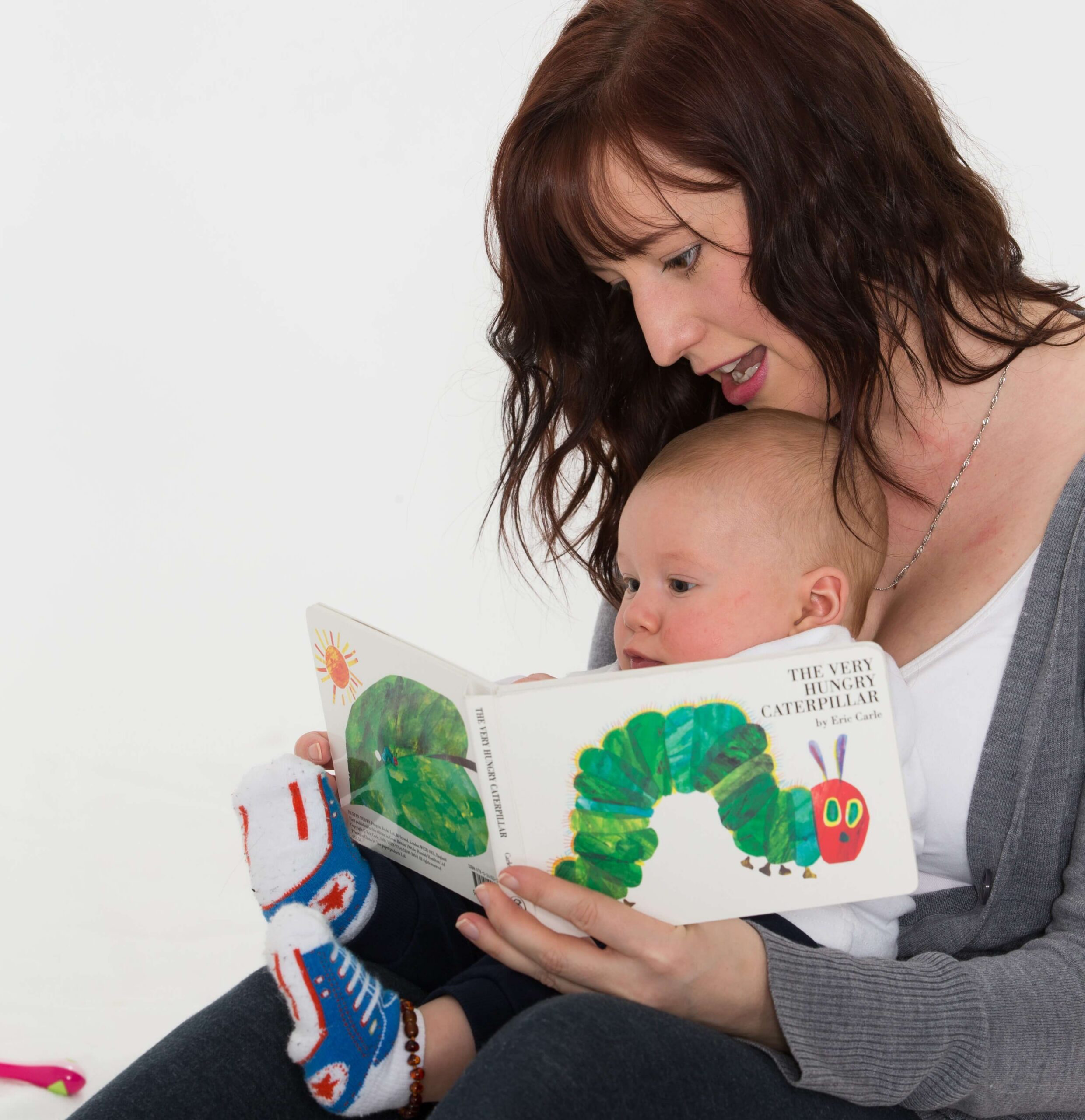
Cuddle up with a book
You can share a book with your baby anywhere. At home, it can be helpful to turn off any background noise such as the television or music so that your baby can focus on sharing a book with you. They will quickly discover that looking at books can be a fun cuddly time.
Sharing books with your baby can fit in with everyday activities and routines – try to find something that works for you both. Perhaps:
- after feeding your baby or before bedtime
- on a bus journey, the park bench or while waiting at the doctors
Cuddling up and sharing books with babies right from the start helps them to grow up with a love of books
Listening and joining in
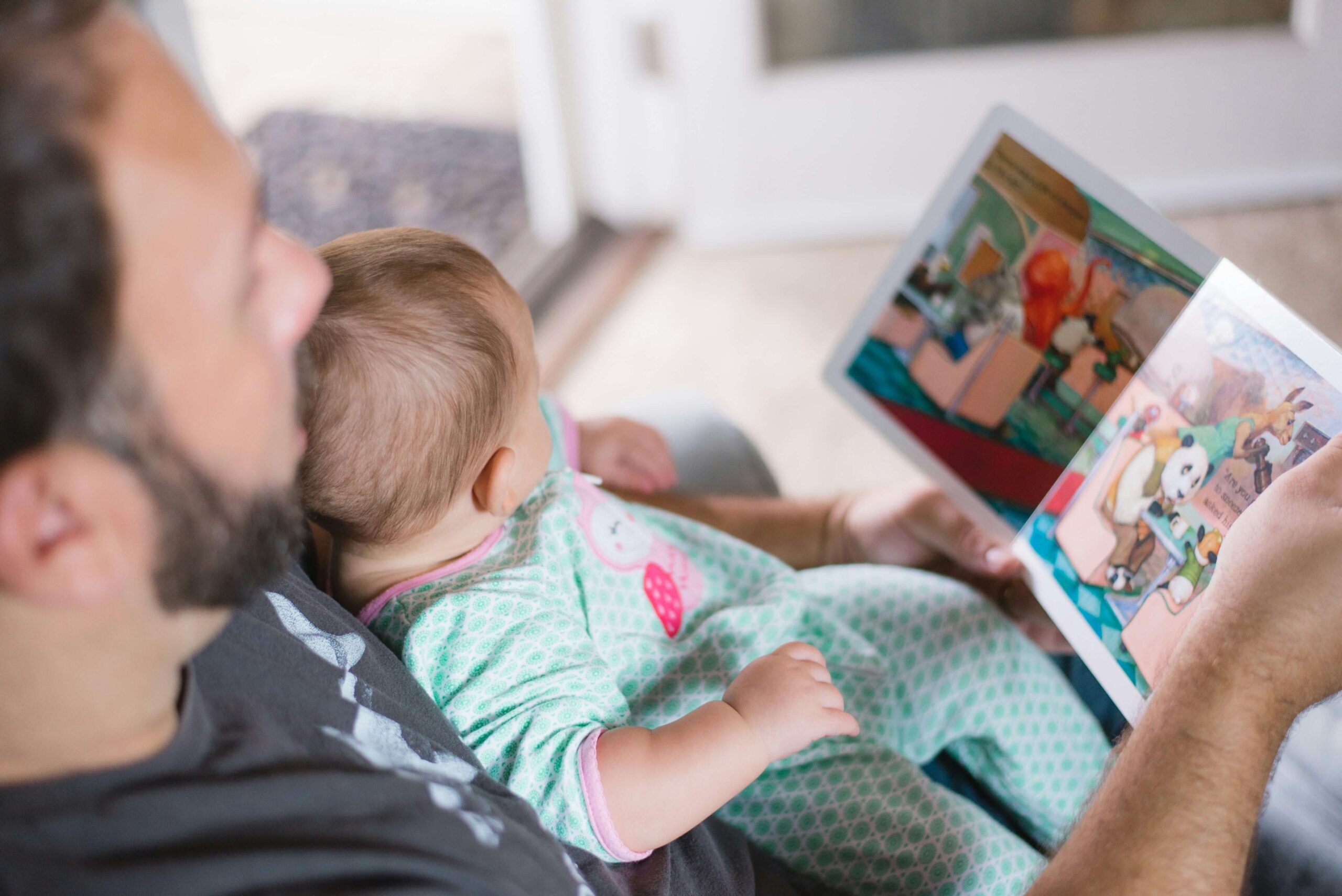
Hearing the rhythms of story language helps babies learn to talk, and later, to read and write
You might feel a bit strange reading to a baby who can’t read or even understand your words. But, by pointing at things in the book, talking, singing and making noises or movements to go with the pictures – your baby will begin to look, listen and think!
Sharing a book with your baby will encourage them to listen and help to develop their concentration. Talking to them about the pictures and pointing to things can encourage them to look at the book and help to focus their attention.
By watching your baby as you share a book with them you will be able to recognise their contributions to the story. Even small babies are very good at making their feelings known! You might notice your baby responding by:
- waving their arms and kicking their legs
- staring at the pictures
- watching your face intently
- smiling, babbling and squealing
- pointing at something on the page
- reaching for the book
Exploring books
Babies like to explore books by looking, listening, handling them, and even putting them in their mouths

In the same way that they discover the rest of their world, babies like to explore books by looking, listening, handling them, and even putting them in their mouths.
You might have noticed your baby trying to reach out and grab books – this shows that they are interested and want to find out more. Handling books helps with their physical development as they stretch out their arms and use their hands to grasp and hold on to books. As they get older they will also begin to master the skill of turning pages. By exploring books, your baby is getting to know:
- what books feel like
- that there is a right way up
- how to turn the pages
- which is the front and which is the back of the book
They will also want to know what books taste like! This is when board, fabric and vinyl books come in handy, but babies can learn to handle paper books as well if they are given the chance.
Books to share
Your baby will enjoy sharing lots of different kinds of books – books with pictures, textures, songs, rhymes or no words at all! Try these:
- books with lift-the-flap or pop-up pages – great for older babies
- black and white books – good for younger babies
- books with bold patterns
- interactive books on a tablet or phone
Your baby will learn a lot from watching how, when and where you and others read books. Older brothers and sisters will often enjoy the special time of cuddling up with their baby to read or tell them a story as well.
It can be helpful to think about whether your baby is in the mood for sharing books. If they are tired or hungry they may begin to squirm and push the book away, or it could be that they just need a break – sharing books can be hard work for babies in the early days!
Try again another time – if it’s enjoyable your baby will quickly discover that sharing books can be a fun, happy, cuddly time.
A battered well‑worn book is usually a well‑loved book!
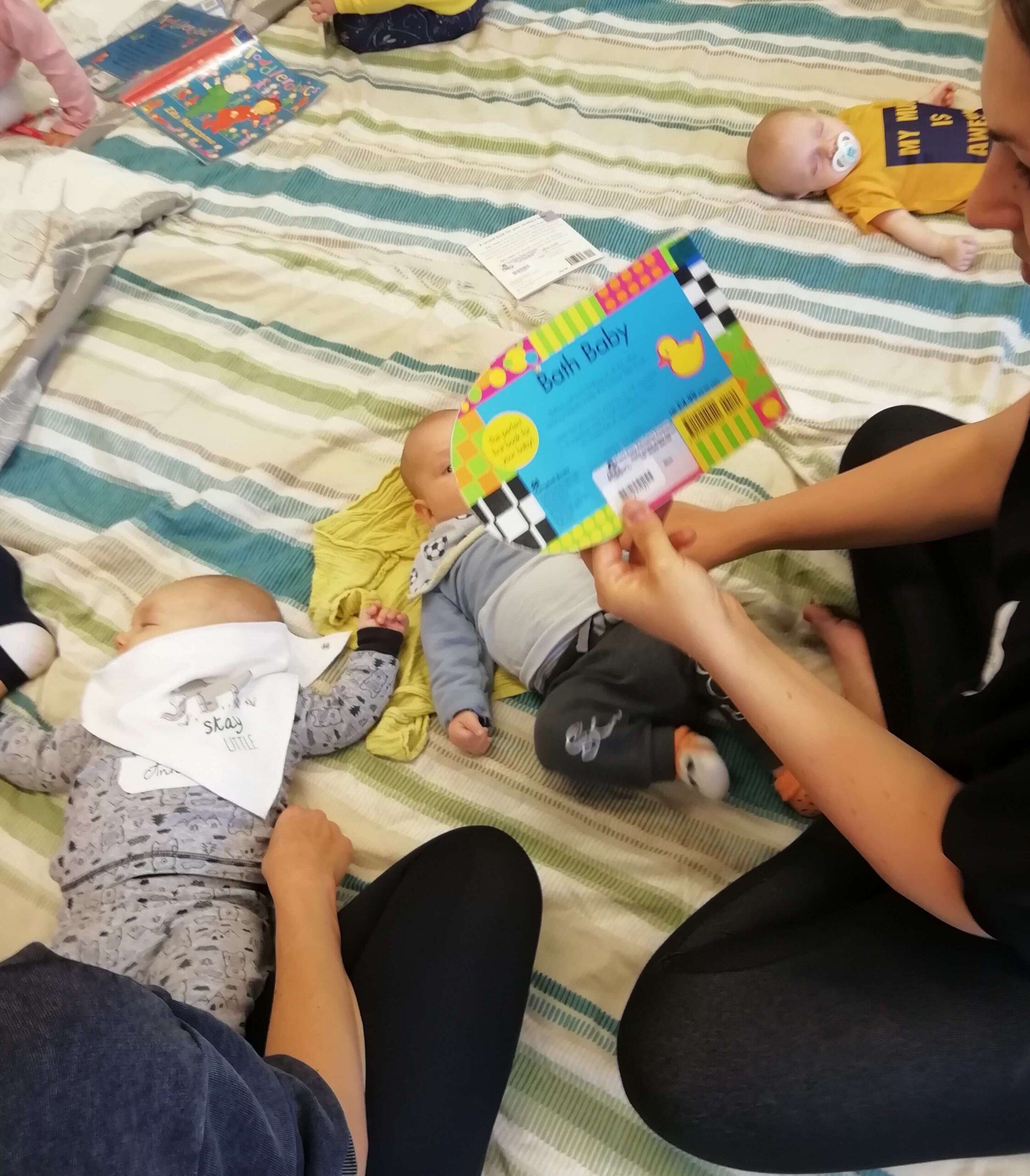
Encouraging a love of books and stories
There are lots of simple ways that you can help.
You could try these:
- Turn off any background noise (e.g. the television) so your baby is not distracted
- Have books within your baby’s reach
- Encourage your baby to choose favourite books
- Let your baby handle books and begin to ‘talk’ or babble a story
- Recognise your baby’s reactions – let them point at the pictures and turn the pages when they are ready
- Join the library with your baby
- Try lots of different books such as picture books, flap books, songbooks, funny books, books on your phone or tablet etc.
- Make a special place and special time to share books with your baby every day
- Let your baby see you exploring books too
When babies and very young children are encouraged to handle books, turn pages and listen to the rhythms of story language, books become familiar friends
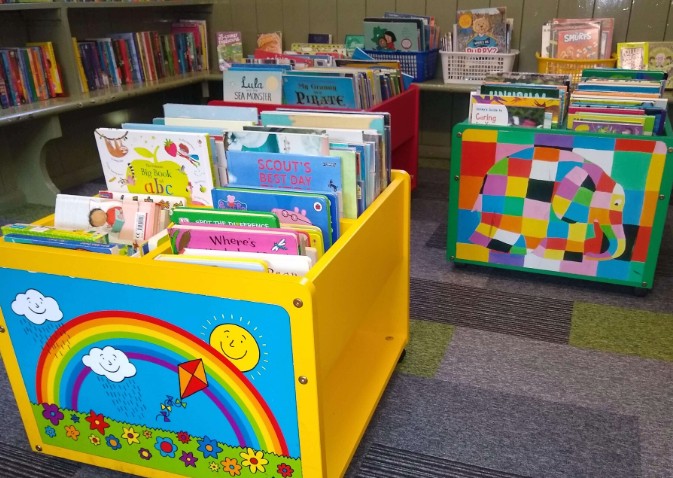
Peep programmes and resources
The information on this page is from our Peep Learning Together Programme. In Peep sessions, families share song and storytime, play activities and conversations focusing on supporting babies’ and children’s development through play and everyday life.
Peep builds on the things you’re already doing with your child, making the most of everyday moments to learn together, have fun and strengthen relationships.
If you’re a parent or carer:
If you work with families:
This resource is one of a selection from the Peep Learning Together Programme shared in support of the Learners from Birth initiative.
Ages and stages: We recognise that children are all different, and developmental needs and interests don’t always align with a child’s age. Any ages mentioned are a general guide – the resources are for using flexibly to meet individual children’s needs and interests.