
Peep Learning Together Programme
Unlocking potential: supporting early development
Research shows that two of the biggest influences on young children’s development start from birth: their relationship with their parents or carers and the experiences they share as a family. These early interactions, sometimes referred to as the Home Learning Environment, play a central role in shaping a child’s future. Parents are their child’s first and most important educators.
How the Peep Learning Together Programme helps
Our evidence-based Programme builds on what families already do, providing a strengths-based way for parents, carers, practitioners and communities to support babies’ and children’s development. It is designed to:
- empower parents and carers to enhance their children’s life chances, by:
- developing sensitive and responsive relationships with their babies and children
- making the most of day-to-day learning opportunities – listening, talking, playing, singing, and sharing books and stories together
- recognising and celebrating their own potential and achievements as learners
- support babies and children to become confident communicators and learners through play
- strengthen practitioners knowledge, skills and understanding, equipping them with the tools to develop their work with parents and children together
- help communities to narrow the attainment gap, which begins before children even reach school.
The Learning Together Programme can be used in groups, stay and plays or 1:1.
Watch our 4-minute ‘What is Peep?’ video to find out more about Peep Learning Together groups, and to hear from Peep practitioners and families.
What is in the Programme and who is it for?
The Peep Learning Together Programme (LTP) was designed for Peep-trained practitioners to use flexibly, to meet the needs and interests of local families. Peep is relevant to all parents/carers and young children, and can be used for both targeted and universal work with families.
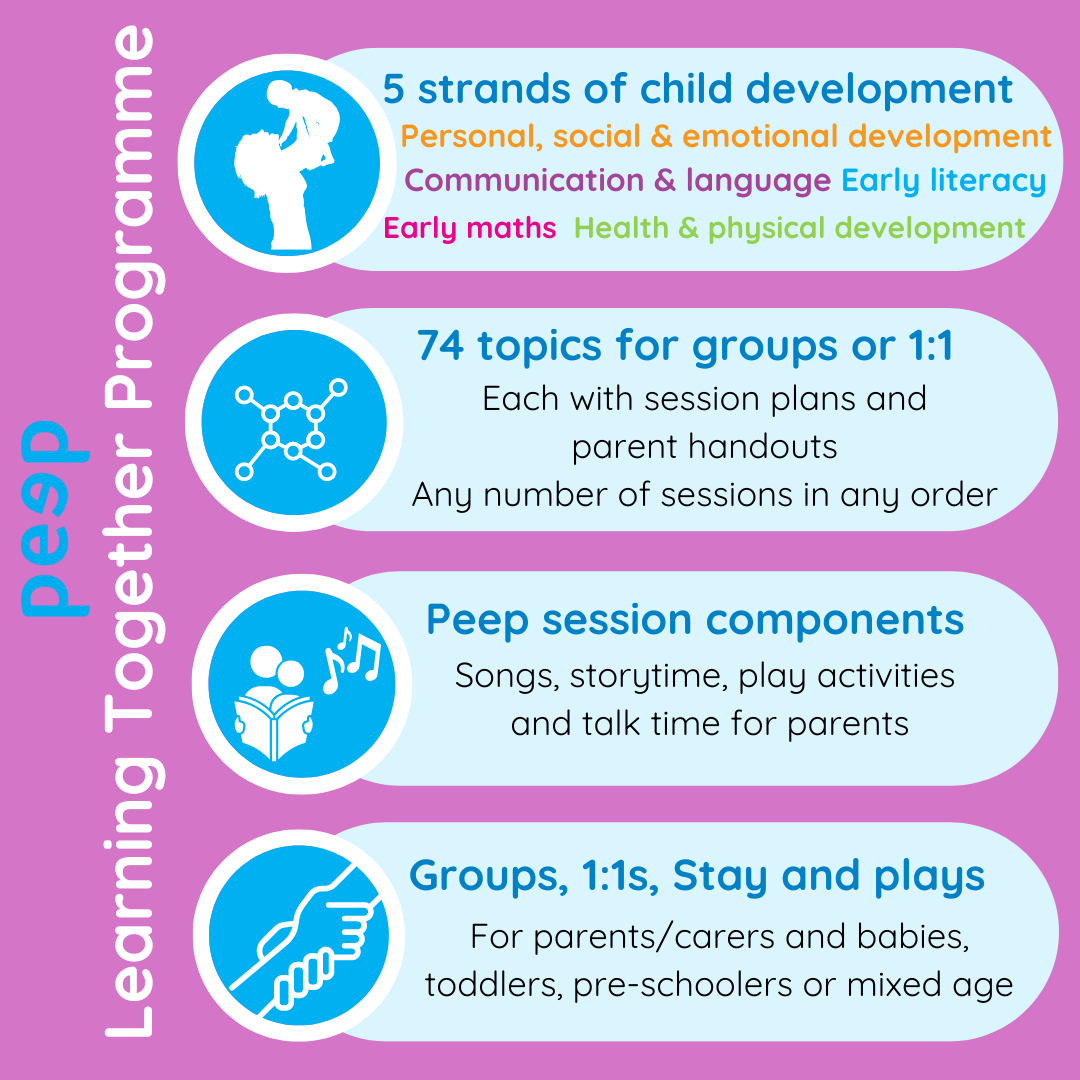
The programme contains 74 topics focusing on babies, toddlers and/or pre-schoolers. It covers five interweaving strands of child development:
- personal, social and emotional development
- communication and language
- early literacy
- early maths
- health and physical development.
Each topic includes child development information and activities, with session plans and parent handouts. They are intended to be used flexibly – any topics, in any order.
The programme materials are all accessible online to Peep LTP practitioners, or they can buy a folder containing all the topics.
Who delivers Peep Learning Together sessions?
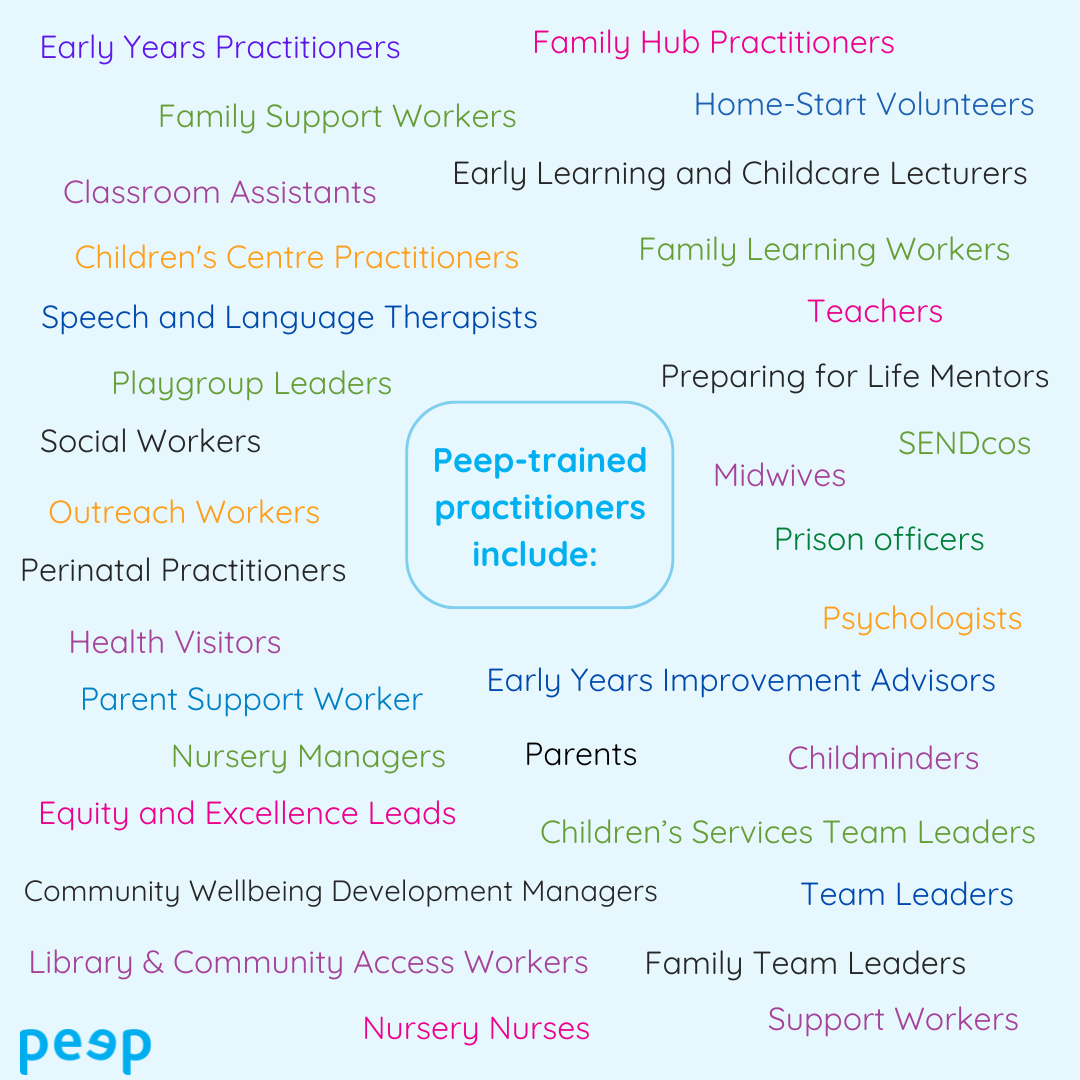
Peep practitioners come from many sectors including family support, health, early education and childcare, schools, children’s centres, family hubs, SEND/ ASN, speech and language therapy, the voluntary sector, early help, adult and community learning, social care, prisons, youth work, psychology, libraries, museums… wherever there are families.
The programme is often used as part of a multi-agency approach to working with families.
What happens in a Peep session?
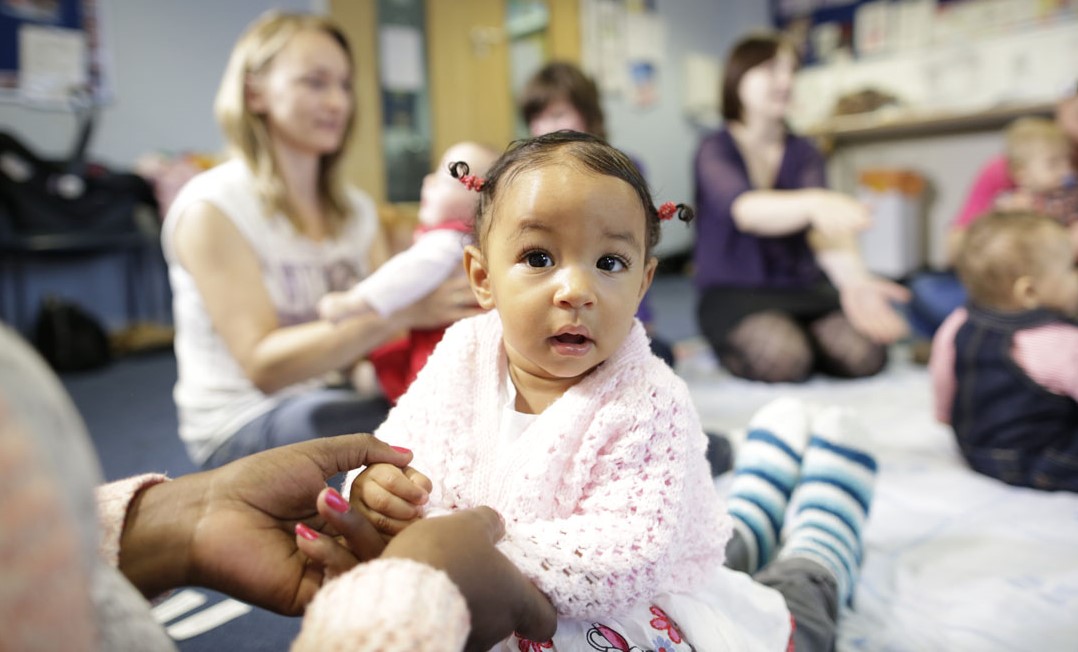
Peep sessions are all about doing with, not doing to, families. Each session is based on a child development topic and includes:
- songs and rhymes
- storytime and book-sharing
- play activities to support learning – both in the session and at home
- talk time with parents to explore the topic and their experiences
These sessions use the ORIM framework (Opportunities, Recognition, Interaction, Modelling) to help families see how everyday activities like singing, talking, and playing strengthen relationships and build children’s communication, socio-emotional, cognitive and physical skills.
Parents often tell us that Peep sessions are fun, increase their own and their child’s confidence, and provide valuable ideas and support from practitioners and other families.
How can organisations use Peep flexibly to meet local needs?
Peep can be delivered anywhere that families spend time – indoors, outside or online. This may be in a Peep group, 1-to-1 or in a stay and play or drop-in session.
Peep groups tend to last about one to one-and-a-half hours, but practitioners can choose how long both sessions and courses last. They can also decide how long each of their Peep Learning Together courses last. The following are a few of the ways:
- a group course of between six to ten weeks,
- one or more occasional sessions, e.g. focusing on transition into nursery or school, or on a strand such as early maths,
- rolling group or stay-and-play sessions throughout the year.
How does Peep make a difference to families and professionals?

Qualification units for parents based on the LTP
The Peep Progression Pathway offers formal recognition of parents’/ carers’ learning based on supporting their child’s learning and development through the Peep Learning Together Programme. It offers nationally recognised units to cover three qualification levels for parents and carers as learners. This builds parental capacity and ‘learner identity’ which research shows makes further progression into volunteering, further learning or work more likely.