
Content Overview: Learning Together Programme
Child development resources for practitioners and families
Peep Learning Together is a structured, comprehensive programme, designed to be used flexibly by practitioners with families. It contains 74 topics covering five strands of child development, summarised below. The topics are standalone, but complement and reinforce each other.
Topics relate to one or more developmental stage:
-
- Babies ~ Toddlers ~ Pre-schoolers
Each topic includes:
- child development insights – key ideas to share and discuss with parents, along with background information for practitioners
- free or low-cost activity ideas which help meet the topic aims
- session plans and delivery guidance
- handouts for parents (shareable by printing or online).
When practitioners attend our Peep LTP Training they are given online access to the whole Programme in our log-in Members Area.
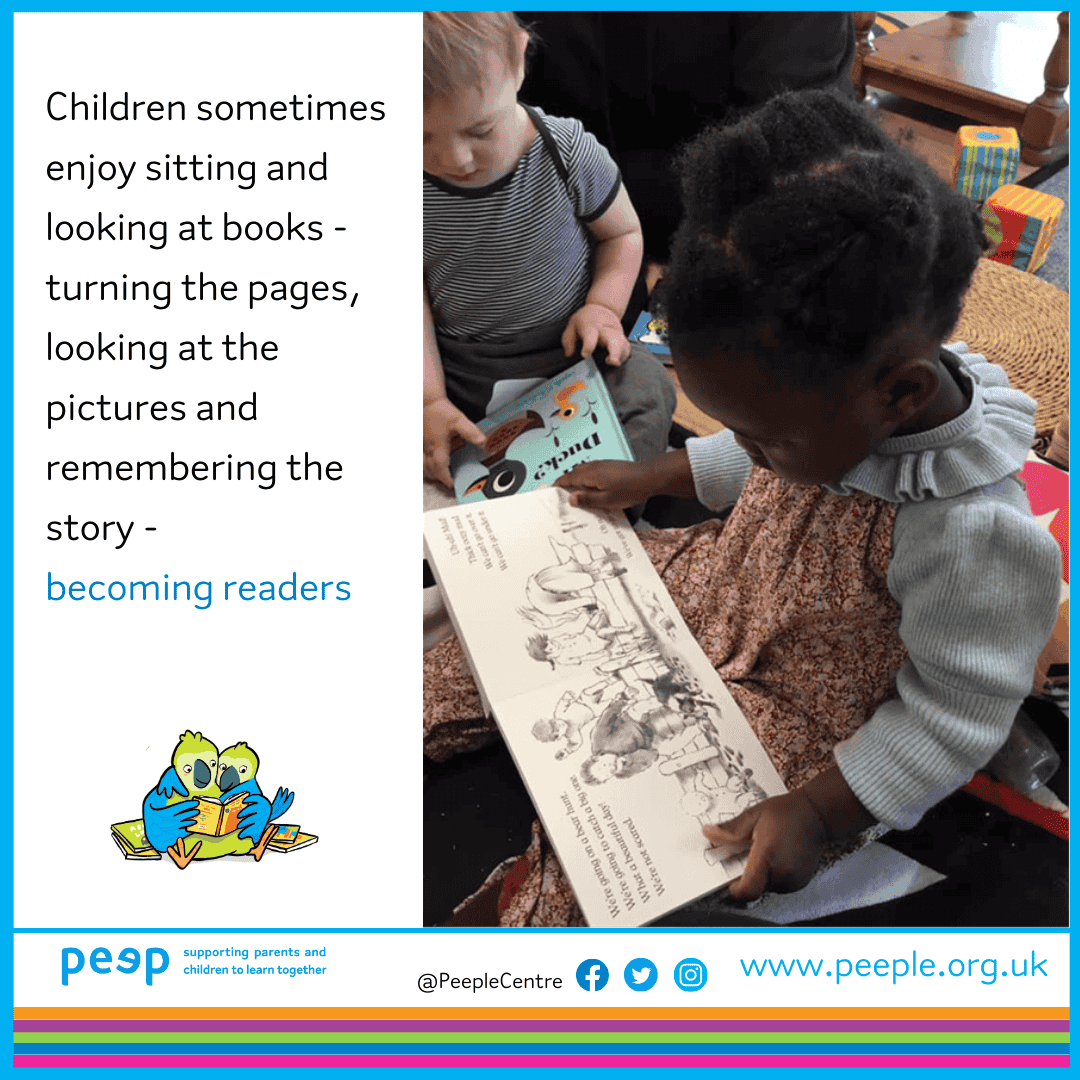
Overview maps of the programme’s child development topics
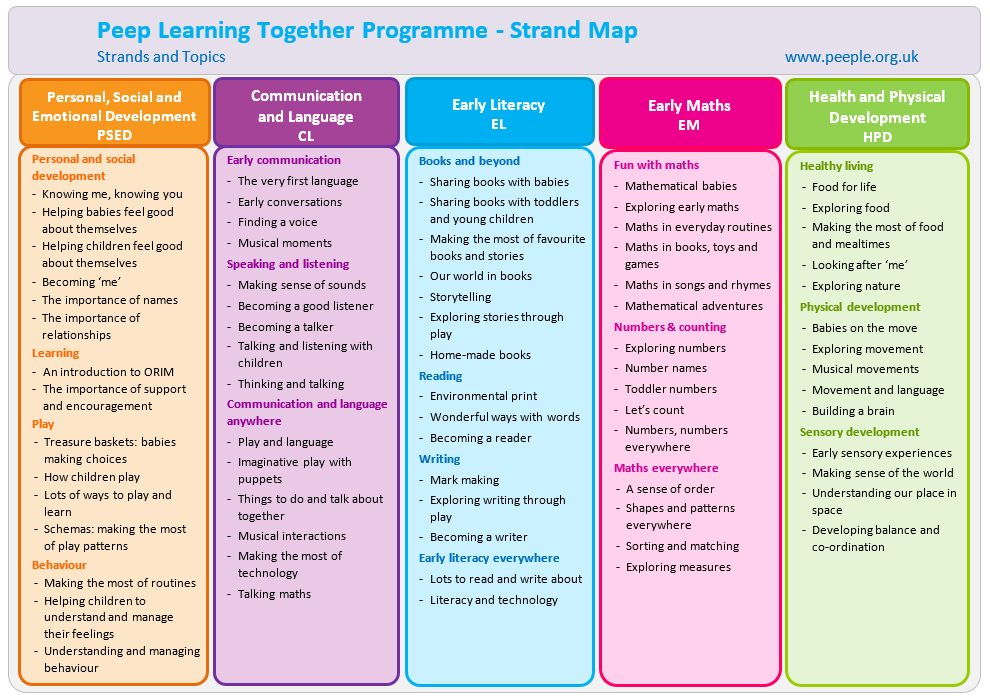
Overview of the 5 child development strands in the Learning Together Programme
These sessions use the ORIM framework (Opportunities, Recognition, Interaction, Modelling) to help families see how everyday activities like singing, talking, and playing strengthen relationships and build children’s communication, socio-emotional, cognitive and physical skills.
Parents often tell us that Peep sessions are fun, increase their own and their child’s confidence, and provide invaluable ideas and support from practitioners and other families.
Personal, Social and Emotional Development topics cover:
- the significance of bonding, secure attachment and positive relationships for promoting babies’ and young children’s learning and development
- developing self-esteem, confidence and positive dispositions for learning
- how babies and young children develop an awareness of their individuality and personal identity (sense of self)
- the importance of play (including schemas and treasure baskets) and the quality of the Home Learning Environment for supporting learning and development
- building resilience and self-regulation – tuning into and helping babies and children to manage their feelings
- understanding and managing children’s behaviour
- an introduction to ORIM (Opportunities, Recognition, Interaction and Modelling) for parents/carers.
Communication and Language topics cover:
- how babies communicate through body language, facial expression, eye contact and sounds
- the importance of early interactions with babies, for bonding and attachment
- how babies’ speech and language develops through watching, listening, making sense of sounds and beginning to use their own voice
- the importance of everyday interactions (speaking and listening, especially in the mother tongue) in developing young children’s speech and language, thinking skills, problem-solving…
- the significance of musical interactions, songs and rhymes for supporting early learning and development
- the importance of play in developing communication and language skills
- the benefits and challenges of engaging with technology
- exploring the language of maths through play and everyday situations.
Early Literacy topics cover:
- the benefits of sharing books and stories with babies and children
- the significance of sharing books and stories and making home-made books, in promoting reading and writing skills
- the importance of books and stories for developing children’s understanding and awareness of the world around them
- the use of storytelling and exploring stories through play for developing children’s early literacy skills and enhancing their imagination
- how an awareness of environmental print (logos, signs, labels etc in the home, and out and about) can support early literacy skills
- exploring the sounds in words through songs, rhymes, poems, stories and everyday conversations
- the importance of mark making and play for developing early writing skills
- the significance of providing everyday opportunities to explore and experience reading and writing in meaningful contexts (e.g. shopping lists, birthday cards)
- exploring the use of technology in early literacy development.
Early Maths topics cover:
- how babies and young children learn about numbers and other mathematical concepts through talking, playing and having fun as part of everyday life
- the importance of adults modelling a positive attitude toward exploring early maths
- how numbers are used in different ways in different contexts
- the importance of sharing books, toys, games, songs and rhymes for supporting children’s understanding of numbers and counting
- the significance of routines and things with a working order for helping to develop a sense of order
- exploring numbers, shapes, patterns, sorting, matching and measuring.
Health and Physical Development topics cover:
- the importance of food for supporting growth, development and health
- how babies and young children develop food preferences
- the role of mealtimes, as well as buying, preparing, cooking and sharing food in supporting early learning and development
- the benefits of exploring nature for increasing well-being, learning to manage risks, and supporting early learning and development
- physical development – including the significance of music, songs and rhymes, as well as exploring language and movement to support conceptual understanding
- brain development
- sensory development – including sight, smell, touch, sound and taste, as well as spatial awareness, balance and coordination.