
The aim of this action research project was to make music accessible to families with preschool children, especially families who, for many reasons, may not access mainstream services. Activities took place in Luton, Birmingham and Oxford.
Inter-cultural approaches to connecting through music
Music leaders liaised with local children’s centre professionals including family support and health workers to:
- establish an integrated approach that helps families to access music provision, and which benefits services to support families
- promote music making as a valued part of provision for families
- raise expectations of what families can do and participate in musically
- develop practical strategies and approaches that are helpful and accessible to families.
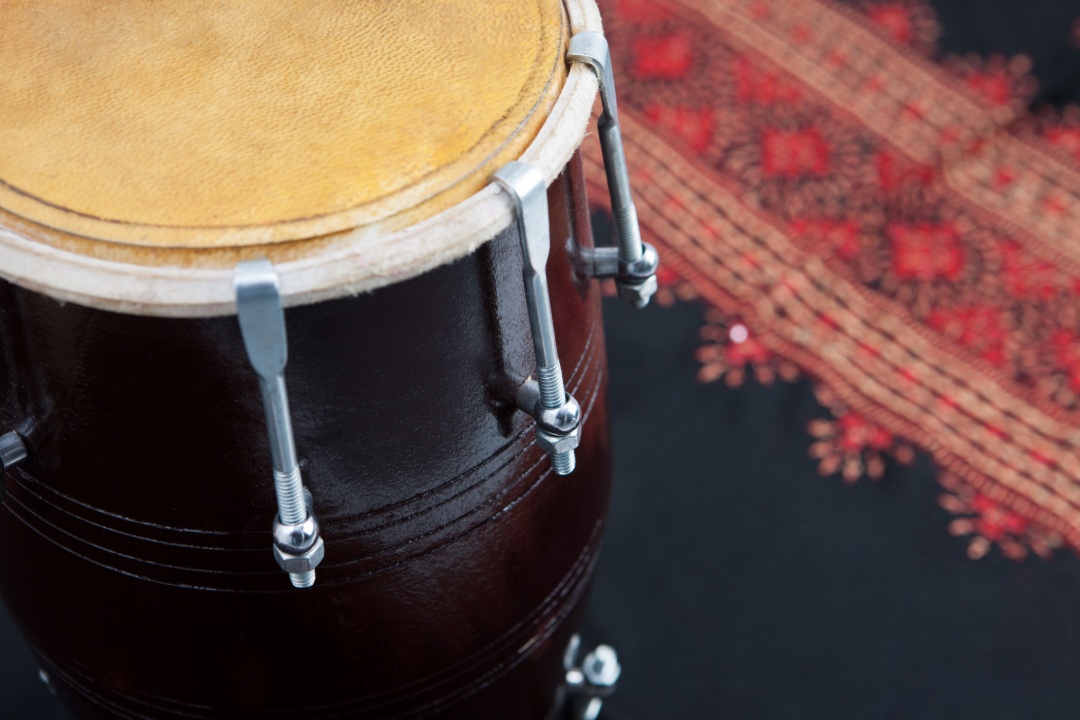
Phase one involved interviews with parents about their existing musical interests and experiences with their children, to inform approaches and with professions about their views on using music with families. Phase two involved direct delivery of musical sessions with families over 20 weeks, and reflective sessions with the musical leaders.
What the project found
Music Moves highlighted the value of starting with families’ own experiences, rather than arriving with a fixed set of songs or activities. Parents already had rich musical lives, including lullabies, folk songs, religious and popular music, nursery rhymes and music shared by relatives living elsewhere. Inviting parents to remember and share songs from their own childhoods helped practitioners learn more about their cultures, languages and family lives, while recognising the knowledge and strengths that parents already brought.
Music also offered a way for families and practitioners to connect when they did not share a spoken language. Practitioners used rhythm, instruments, gestures, smiles and musical improvisation to respond to children and parents. Some parents joined in immediately, while others preferred to watch from the edge of the group; the project showed the importance of allowing people to participate in different ways and giving relationships time to develop.
The project found that effective practice was flexible and open-ended. Practitioners needed to listen carefully, respond to families’ interests and visible cues, and be prepared to adapt their plans. Working alongside trusted family support, outreach and early years staff was also important for making initial contact with families and helping the work continue beyond a short-term project.
For some parents, sharing familiar songs supported much more than musical participation. It created opportunities to talk about identity, family relationships, isolation and memories of home. Parents also explored how singing and lullabies could support communication, emotional connection and bonding with their children.
What this means for practitioners working with families
The project suggests that practitioners can:
- ask families about the songs, rhymes and music they already enjoy, including music in their home languages
- treat parents as partners with valuable cultural knowledge, rather than assuming that the practitioner is the musical expert
- offer different ways to take part, including listening and watching, without pressuring parents to perform
- use music, movement, gesture and shared rhythm where spoken communication is difficult
- allow time to build trust and understand what matters to each family
- work with practitioners who know the community and, where possible, speak families’ home languages
- reflect regularly with colleagues and adapt activities in response to families rather than following a rigid plan.
Music Moves ran for two terms, from Sept 2011 to end of March 2012. The project was administered through St Thomas Centre in Birmingham, headed up by Cynthia Knight. It was funded by Youth Music and evaluated by Dr Susan Young from the University of Exeter.
The project contributed to the production of a CD of rhymes and lullabies and to the development of a training day in ‘Working with South Asian Families’. Dr Alison Street and Nuzhat Abbas reflected on this project in a paper they presented at the Music Educators and Researchers of Young Children (MERYC) conference found below.